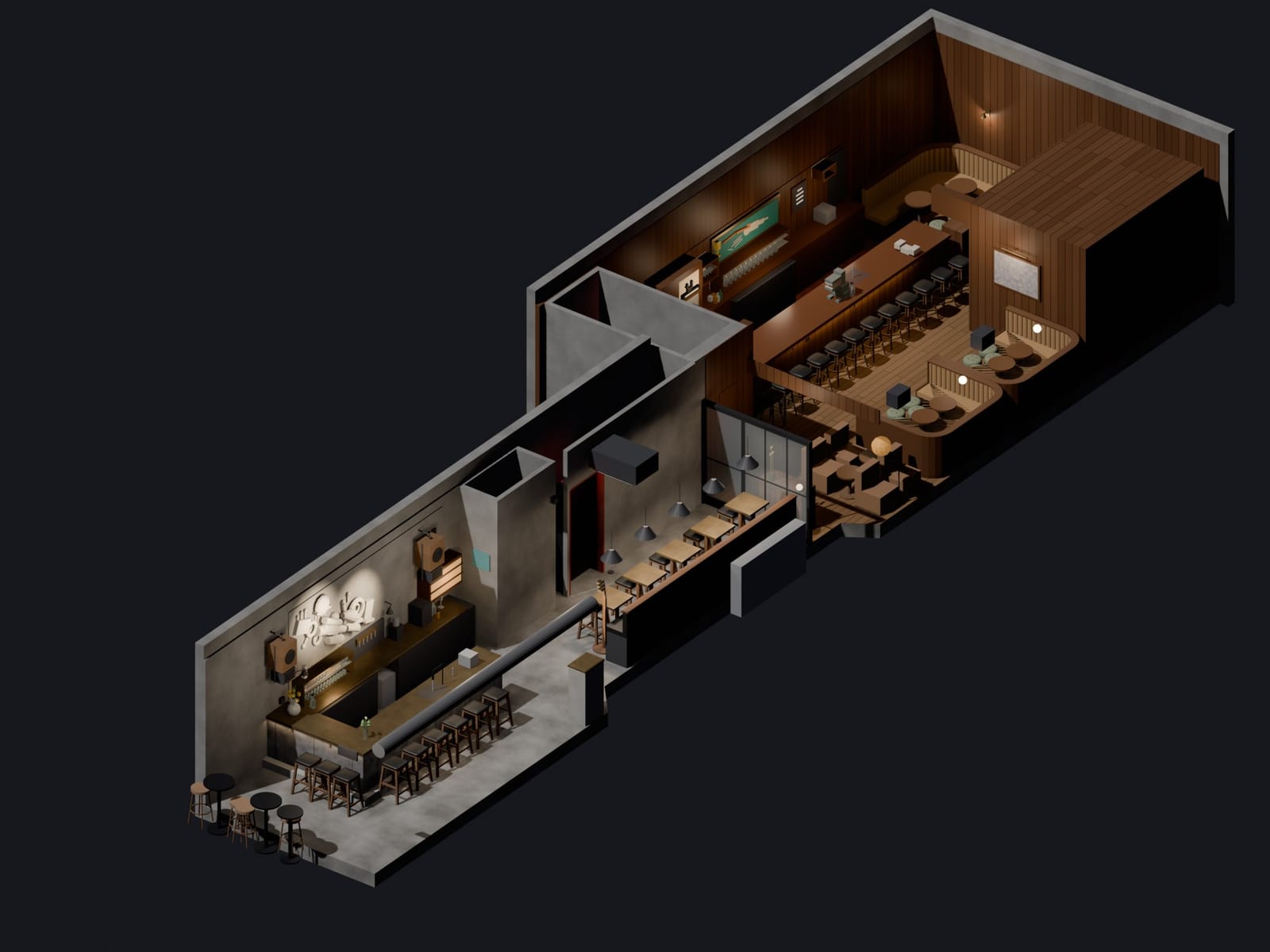
Step 01. Zone · Free Range (front, walk-in): front room and corridor
Free Range
What happens here
Free Range is counter service for walk-ins: 24 seats between the counter stools and the corridor tables, with cocktails built to order from a printed card of twelve. One bartender works it from Tuesday to Thursday and on Sunday, two on Friday and Saturday. At peak, guests also stand at the counter and by the door.
Key figures
- Seats
- 24
- Bar stations
- 12 sources
- Standing room
- 30–80 covers a weekStanding room at bar counter and entry vestibule during peak hours (5-7 PM, 10:30-11 PM), Fri/Sat only
Why the layout matters
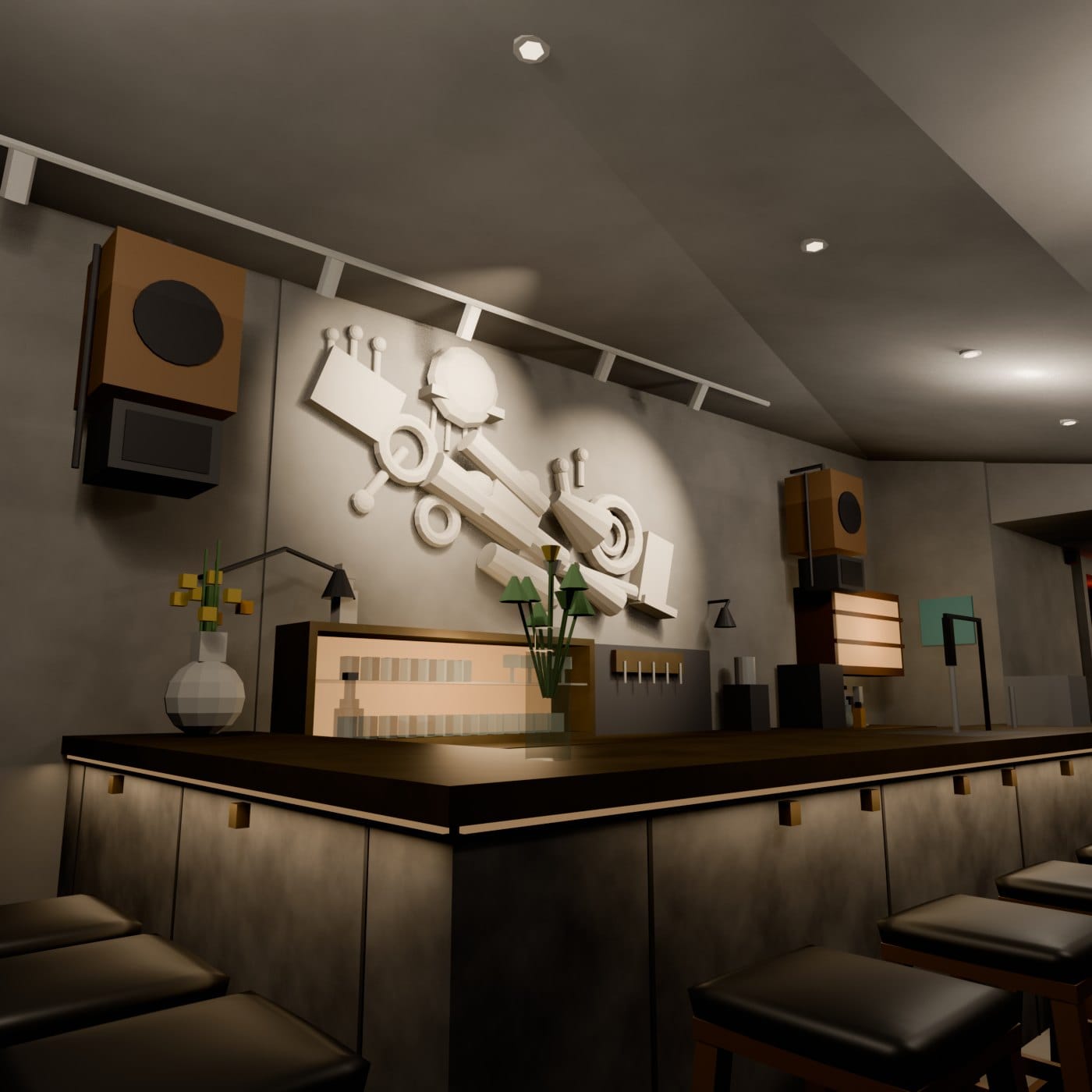
An L-shaped counter fills the left of the room: a street return with three stools and a long run with five or six more, facing a back bar and the sculpture wall that has anchored the room since the October 2024 redesign. The redesign ended the draft cocktails the room opened with; the taps now pour soda and water.
- AdjacentJuice and garnish station inside the Free Range service aisle.Free Range service station (rail, mat and wells in the long run's counter top at the working edge) · Free Range bar assembly (L counter, service aisle, back bar and sculpture wall)
- AdjacentThe entry door lands at the street return of the Free Range counter (3 stools face the door).Entry door (Allen Street), last bay at the right end of the frontage against the lot-line wall · Free Range bar assembly (L counter, service aisle, back bar and sculpture wall)
Evidence: EstimatedConfidence: MediumR-CB3-2019-115ALLEN-DCP · Municipal recordCB3 30-day SLA notice, questionnaire and Full Board resolution for 115 Allen Street, Double Chicken Please transfer application, May-June 2019 (one hearing, three documents)R-EATER-VIDEO · Video (existing root, reused)Eater 'Mise En Place' YouTube video (tglfDwObFNU), already registered in bars/double-chicken-please/data/evidence.json as EV-40/EV-42; this fragment adds equipment-specific frame and transcript observations from the same video under R-EATER-VIDEO.R-RESY-GALLERY · Reservation platform galleryResy venue gallery for The Coop and Free Range spacesR-RESY-OPERATIONS · Reservation platform blog postResy blog analysis of Double Chicken Please operations, peak hours, wait times, and capacity metricsR-SLIGHTLYPRETENTIOUS-VISIT · Restaurant review blogSlightly Pretentious review with specific visit timing, dwell and crowd observationsR-SPIRITED · Press articleSpirited Drinks and Spirits Business coverage of Free Range renovationR-WEBSITE · Official websitedoublechickenplease.com about and visit pagesR-YELP · Review platformYelp business page: listing, guest reviews and guest photo pool, one publisherR-YELP-PHOTOS · Review photo poolYelp gallery (3,428 photos from 982 reviews) showing interior and drinks
Opens the 3D room at FREE RANGE REAR, for step: Free Range.